


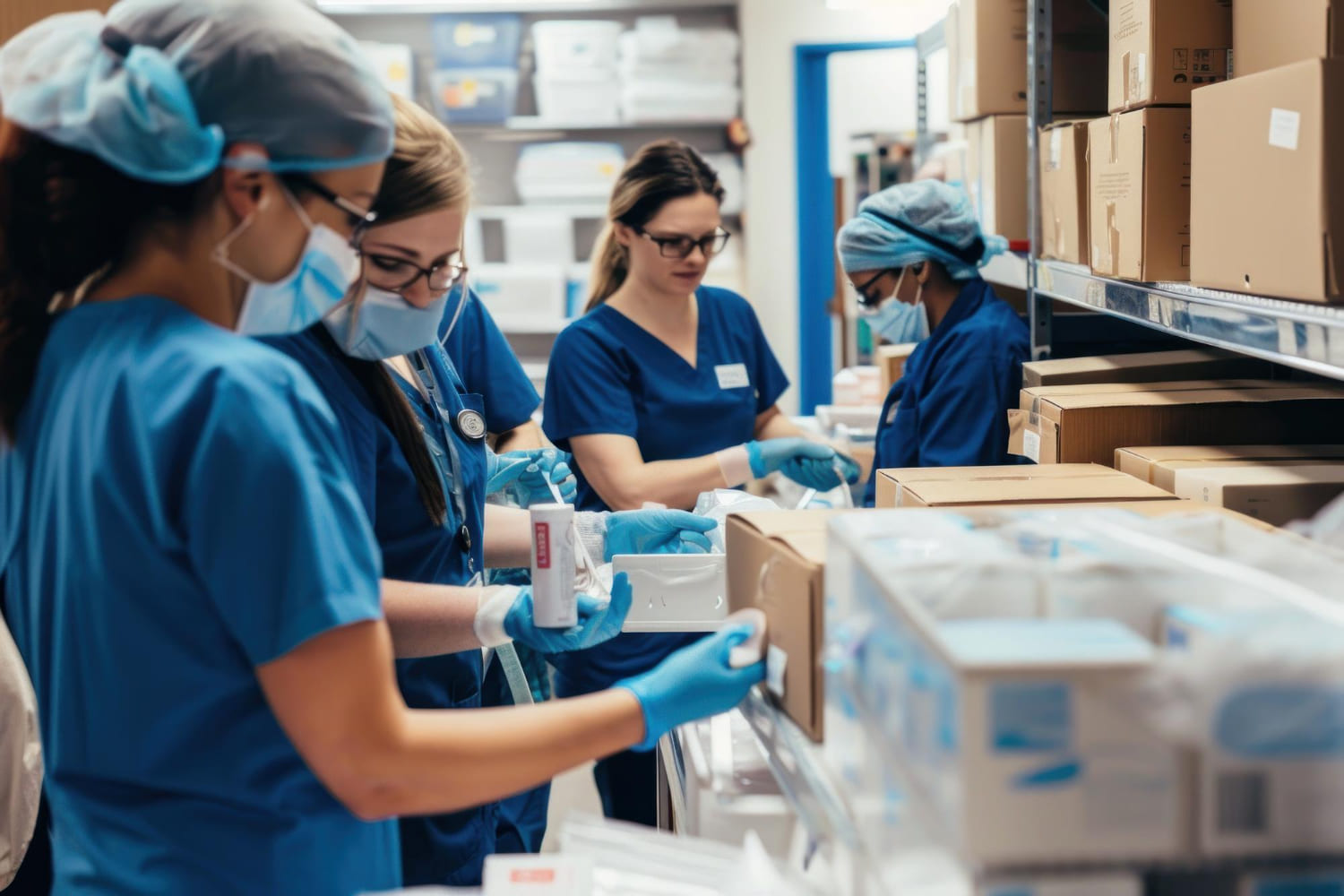
At DIR Mensajería, we have been working since 1990 in the express transport, courier and logistics sector for companies that need precision, speed and control in their operations. This experience has taught us that, in sensitive sectors such as healthcare, logistics cannot be treated as a simple transfer of packages. Each shipment requires planning, traceability and an agile response to avoid incidents that may affect the service. That is why, in this article, we want to explain what healthcare logistics is, what processes it includes and why good management can make the difference for clinics, hospitals, laboratories, pharmacies and companies linked to the health sector.
We explain what healthcare logistics is
Healthcare logistics is the set of processes that makes it possible to store, prepare, transport, control and deliver products related to the field of health. It can include clinical material, healthcare products, instruments, medical documentation, samples, equipment or supplies for medical centers.
When we ask ourselves what healthcare logistics is, it is worth understanding that we are not just talking about moving products from one point to another. It is about coordinating a complete chain in which each phase matters: collection, preparation, packaging, transport, traceability, delivery and, in some cases, return or subsequent management.
The difference compared to other types of logistics lies in the level of demand. In the healthcare sector, many shipments require punctuality, document control, careful handling and clear communication with the client.
For this reason, healthcare logistics must be adapted to the type of product, the level of urgency, the destination and the conditions of each shipment. Not all materials have the same needs, and this prior analysis is key to defining safe operations.
Why is healthcare logistics so important?
Logistics plays an essential role in the daily functioning of the health sector. A healthcare center needs to receive the right material at the right time to maintain its activity, care for its patients and avoid interruptions.
In this context, punctuality is not just a matter of convenience. A late delivery can affect an appointment, a test, a restocking or a procedure. That is why logistics planning must reduce margins of error as much as possible.
Traceability is also important. Knowing where a shipment is, when it was collected, what condition it is in and when it will be delivered provides security for the client and allows quick action if an incident arises.
In addition, well-managed healthcare logistics helps to avoid indirect costs. Preparation errors, delays, poorly organized returns or inadequate packaging can generate claims, urgent replacements and loss of time.
Main processes in healthcare logistics
To better understand what healthcare logistics is, it is useful to see which phases usually form part of the operation. Although each company or center may have different needs, there are processes that appear frequently.
Among the most common we find:
- Collection or reception of goods.
- Product control and identification.
- Storage, when the shipment is not immediate.
- Order preparation or picking.
- Packaging and labeling.
- Transport and tracking.
- Delivery confirmation.
- Return management, if applicable.
Each phase must be well coordinated. If the product is prepared incorrectly, transport will not solve the problem. If the packaging does not properly protect the contents, there may be damage during transit. And if there is no tracking, the client will not have enough information to act in the event of an incident.
At DIR Mensajería we know that efficient logistics depend on many small details. That is why services such as storage, picking, packing, express transport and reverse logistics form part of a more complete view of the logistics chain.
Differences between healthcare, pharmaceutical and hospital logistics
Although they are sometimes used as if they were the same, healthcare logistics, pharmaceutical logistics and hospital logistics are not exactly identical.
Healthcare logistics is the broadest concept. It encompasses processes related to products, materials or supplies linked to the health sector. It can be applied to clinics, hospitals, laboratories, distributors, pharmacies or healthcare product companies.
Pharmaceutical logistics focuses more specifically on medicines and regulated products. In these cases there may be special requirements for storage, distribution, traceability and regulatory compliance. For this reason, not all logistics operators can handle this type of goods if the product requires specific authorizations or conditions.
Hospital logistics, for its part, is more closely related to the supply of hospitals and care centers. It can include surgical material, disposable products, documentation, equipment, internal restocking or distribution between centers.
Understanding this difference helps to choose the right service. One company may need an urgent shipment of healthcare documentation, another may require storage and order preparation, and another may need regulated operations for pharmaceutical products.
What should good healthcare logistics include?
Good healthcare logistics must combine speed, safety, control and adaptability. It is not enough to promise fast deliveries if there is no solid operation behind them.
One of the first aspects to assess is planning. Before moving any product, it is advisable to know what is being shipped, what requirements it has, where it must be delivered, within what time frame and what documentation accompanies the shipment.
Packaging is also essential. For sensitive products, packing should not be chosen only based on price, but on protection, strength and identification. Good packaging reduces damage, facilitates handling and improves receipt at destination.
Another key point is communication. The client must be able to know what is happening with their shipment and receive clear answers if a problem arises. In sectors where punctuality and trust are so important, personalized service still has great value.
Healthcare logistics and ecommerce
Ecommerce has also reached the health and wellness sector. More and more companies sell online non-prescription healthcare products, auxiliary material, personal care products or items related to prevention and wellness.
In this type of operation, order preparation is essential. A reference error, a wrongly generated label or a lack of stock can directly affect the end customer’s experience. That is why picking and inventory control play an important role.
Packaging also has a strong influence. It not only protects the product during transport, but also conveys trust and professionalism. For products related to health, the customer expects to receive a carefully prepared order, clearly identified and properly protected.
In addition, returns must be taken into account. Reverse logistics makes it possible to manage products that return to the warehouse, check their condition and decide the next step. Having a clear process prevents disorder, losses and traceability problems.
How to choose a healthcare logistics provider?
Choosing a provider should not depend solely on price. In healthcare logistics, it is advisable to assess experience, response capacity, traceability, customer service and the ability to adapt the service to each type of shipment.
Before making a decision, it is advisable to ask yourself some questions: what type of product will be shipped, whether it requires special conditions, whether the service will be one-off or recurring, whether storage, picking or packing is needed, how incidents are managed and what level of tracking the provider offers.
These questions help avoid solutions that are too generic. Healthcare logistics needs a practical but also responsible approach. Each shipment must be analyzed according to its urgency, destination, sensitivity and role within the client’s operations.
At DIR Mensajería we work with companies that need agile, customized and well-coordinated logistics solutions. Our experience in express courier, national and international transport, storage, picking, packing, ecommerce and reverse logistics allows us to understand logistics as a complete process, not as a simple delivery.
Well-designed healthcare logistics provides control and confidence
Now that you know what healthcare logistics is, it is easier to understand why this service is so important in the health sector. It is not just about transporting products, but about ensuring that each phase of the process works with order, safety and visibility.
Good healthcare logistics helps reduce errors, improve delivery times, better control stock and offer a more reliable experience both to companies and to final recipients.
The key is not to treat all products the same. Each shipment has its own needs, and that is why it is important to work with a provider that knows how to listen, adapt the solution and maintain clear communication throughout the entire process.
At DIR Mensajería we believe that well-managed logistics should provide peace of mind, efficiency and responsiveness. If your company needs to review its transport, storage, order preparation or distribution processes, we can help you find a solution tailored to your operations.
Do you need safer and more efficient healthcare logistics?
Now that you understand what healthcare logistics is, if you have noticed that your processes could improve, it may be time to review how you manage your shipments, storage or order preparation.
At DIR Mensajería we can help you organize more agile, traceable logistics adapted to your company’s needs, integrating express transport, storage, picking, packing and reverse logistics services whenever your activity requires it.
Logistics in the health sector should not generate uncertainty. It should provide control, confidence and responsiveness at every stage of the process.


